One search across every source. Then a mind that reads it.
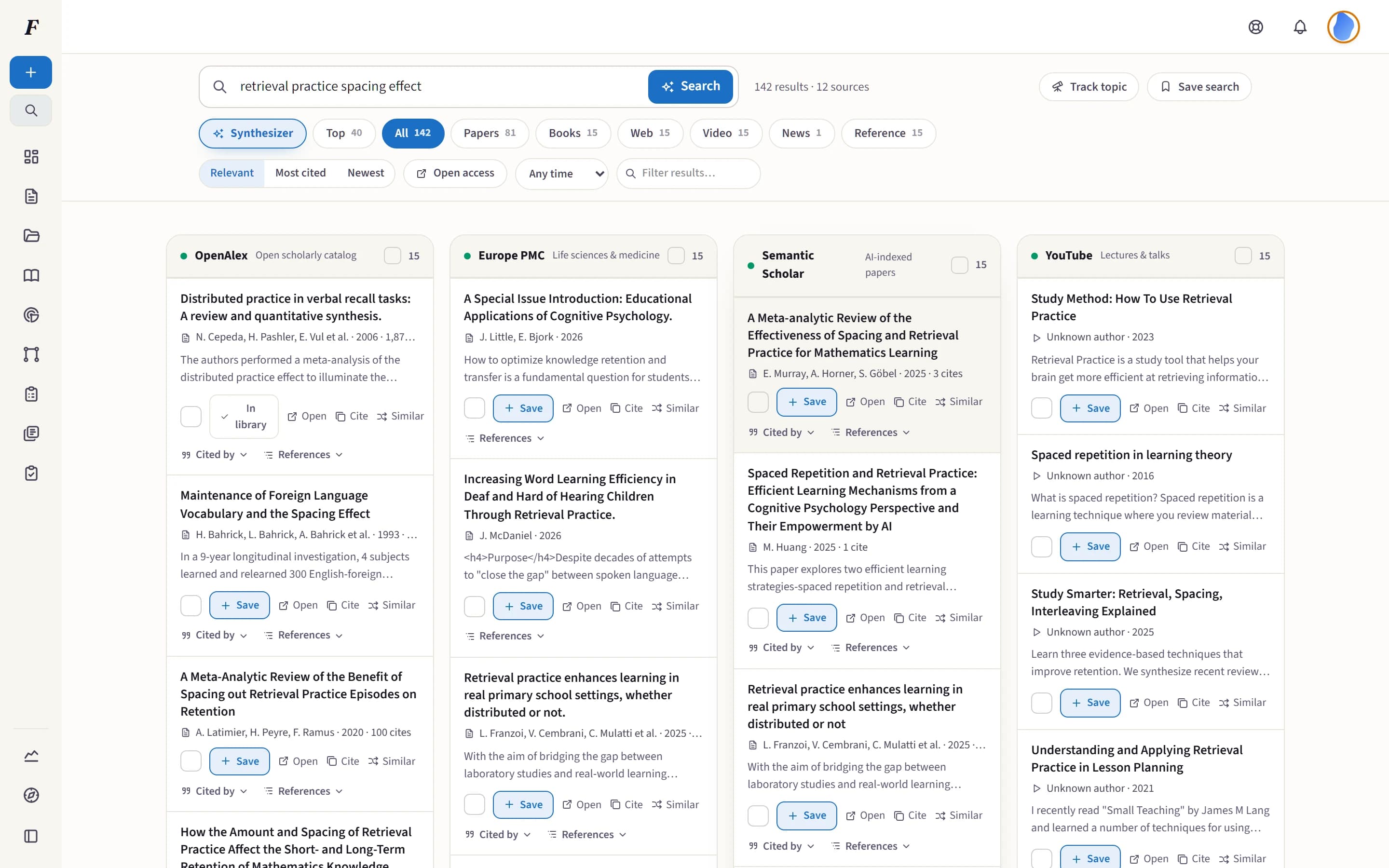
Type a topic, thesis, or half-formed question. Folio fans it across academic databases, the open web, books and lectures at once. Results stream in live, and the Synthesizer thinks through them as they arrive, handing you the sources that matter.
Start freeEight indexes, fanned out in parallel: Semantic Scholar, OpenAlex, Crossref, arXiv, Europe PMC and DOAJ for papers, plus books, the open web and lectures. No scraped Google Scholar, because that is not a source anyone can promise honestly.
Questions, answered
How is this different from a normal literature search?
Two ways. It runs every source at once and streams them in live, so you see the whole landscape immediately. And the Synthesizer doesn’t just list results — it reads across them and tells you where to start and why.
Does the Synthesizer make things up like other AI tools?
No — and this is the point. It can only cite the sources Folio actually retrieved, referenced by number, so every source it names is a real result you can open. It also tells you honestly when the literature is thin rather than padding.
Which sources does it search?
Semantic Scholar, OpenAlex, Crossref, arXiv, Europe PMC and DOAJ for papers; Google Books and Open Library for books; plus the open web and YouTube for talks and lectures. We don’t promise sources we can’t search honestly (no scraped Google Scholar).
What happens to the sources I pick?
They save to your library — auto-embedded for semantic search — and you can bundle a selection into a new literature-review document, seeded with a synthesis matrix and real citation chips.
Which plan includes Folio Search?
The search itself is free — fan a query across every source, follow the citation graph, and save what you find, as much as you like. The Synthesizer, the grounded mind that reads across your results, is part of the Fellow and Chair plans.
Start a paper the honest way.
One search, every source, nothing invented. Start free.
Free to start · No credit card · Export everything · No ads